Thank you for writing to us. One of our executive will reach back to you through your submitted medium. In case there’s an urgency, feel free to connect over WhatsApp for faster response.
Prefer calling? Dial +9108048068884 (International callers) or 08048068884 (Indian callers).
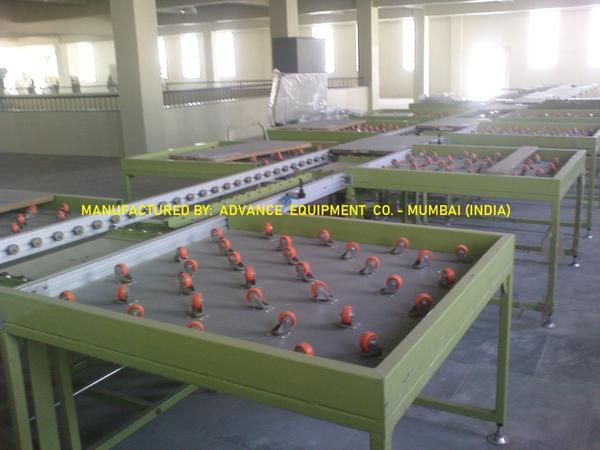
Skate Wheel or Ball transfer Conveyors are very economical solutions when handing odd heavy goods.
Skate wheel conveyors are a type of gravity conveyor system designed for efficient and flexible material handling. Here's a detailed overview:
What Are Skate Wheel Conveyors?
Skate wheel conveyors consist of small wheels—often made of steel or plastic—mounted on axles across a frame. These wheels allow items with flat bottoms (like boxes or totes) to roll smoothly along the conveyor path.
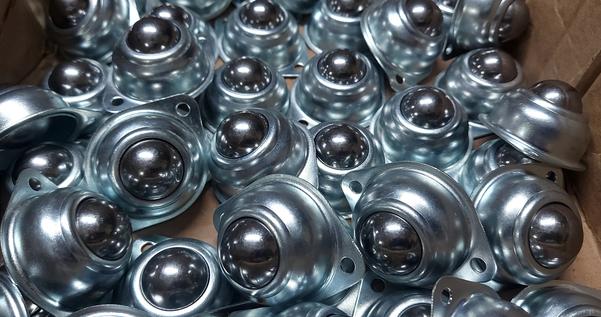
A ball transfer unit (BTU) is a clever little device that makes moving heavy or awkward loads feel like a breeze. It’s essentially a housing with a large ball bearing that sits atop smaller bearings, allowing for 360-degree movement with minimal friction.
🛠️ What It’s Used For
Ball transfer units are commonly found in:
• Conveyor systems for material handling
• Assembly lines where items need to be rotated or repositioned
• Air cargo terminals for smooth luggage or freight movement
• Machine tables to easily shift components during manufacturing
⚙️ Key Features
• Omnidirectional movement: Items glide in any direction
• Mounting options: Surface-mounted, recessed, or spring-loaded
• Material choices: Stainless steel, carbon steel, plastic, or hybrid
• Load capacity: Ranges from light-duty to heavy-duty (up to 8000 kg per unit in some models)
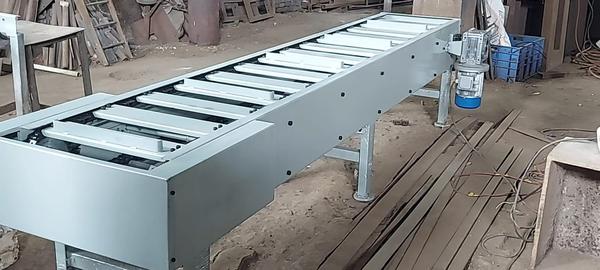
A slat conveyor is a type of industrial conveyor system designed to move heavy or oddly shaped items across a production line using a series of flat slats attached to a chain.
🛠️ Key Features
• Slats: Made from metal, wood, or plastic, these flat panels are mounted on chains to form a continuous moving surface.
• Chain Drive: The slats are driven by a motorized chain system, ensuring consistent movement.
• Customizable: Width, length, and slat spacing can be tailored to specific applications.
🏭 Common Uses
• Assembly Lines: Ideal for automotive, machinery, and appliance manufacturing.
• Packaging Units: Used to transport boxes, bottles, and cartons.
• High-Temperature Environments: Suitable for moving hot or heavy items that belts can't handle.
✅ Advantages
• Stable surface for transporting items
• Can support fixtures for robotic or manual assembly
• Works well in harsh or high-load conditions
• Allows for precise positioning and indexing
🚫 Limitations
• Not suitable for curved paths
• Doesn’t allow product accumulation (items can't bunch up)
• Less flexible than roller or overhead conveyors for changing product types
If you're curious about how these systems are used in specific industries or want help designing one, please send your enquiry on advanceequipments@hotmail.com
A belt-driven roller conveyor is a versatile and widely used system for transporting unit loads like boxes, totes, and fixtures across various industries. Here's a quick breakdown of how it works and where it's used:
⚙️ How It Works
• A motor-driven belt runs beneath the rollers, transferring motion to them through friction.
• The rollers then move the items placed on top, making it ideal for long-distance transport with a single motor.
• By adjusting the belt’s position, you can create accumulation zones where products pause without stopping the entire line.
🏭 Applications
• Common in warehousing, manufacturing, order fulfillment, and automotive sectors.
• Suitable for minimum pressure accumulation, allowing items to queue up gently without damage.
🔧 Key Features
• Simple mechanical design with easy maintenance.
• Can handle light to heavy loads, depending on roller type and frame.
• Available in straight, curved, and spur configurations for flexible layouts.
🛠️ Types of Rollers
• Plastic or nylon rollers for quiet, corrosion-resistant operation.
• Rubber-coated rollers for extra grip and protection.
• Steel or stainless-steel rollers for heavy-duty use.
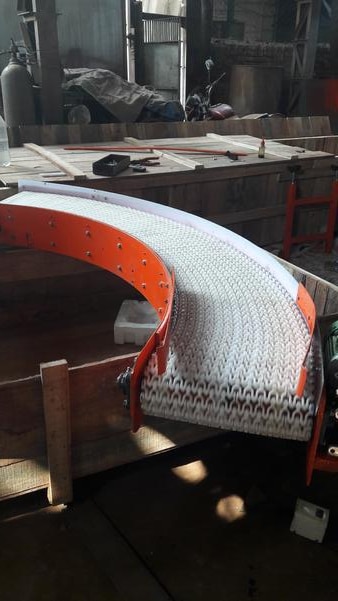
A modular belt conveyor is a versatile and durable material handling system used across industries like food processing, packaging, pharmaceuticals, and manufacturing. Below are details of what makes it special:
What’s this?
• Made of interlocking plastic or metal modules that form a continuous belt
• Typically constructed from polypropylene, polyethylene, or acetal
• Designed for easy maintenance—damaged sections can be replaced individually
Key Advantages over conventional PVC belt
• Customizable layout: Can be configured to curves, inclines, or declines
• High durability: Withstands heavy loads and harsh environments
• Easy to clean: Ideal for hygienic applications like food or pharma
• Low noise & energy efficient: Smooth operation with minimal power usage
• Food grade Safe: It can be safely used in Food & Pharma industry.
• Safe transport: Flat surface minimizes product damage during movement
Common Applications
• Transporting packaged goods, bottles, boxes, or delicate items
• Used in automotive, logistics, electronics, and warehousing
• Especially useful for wide or bulky products that need stable support
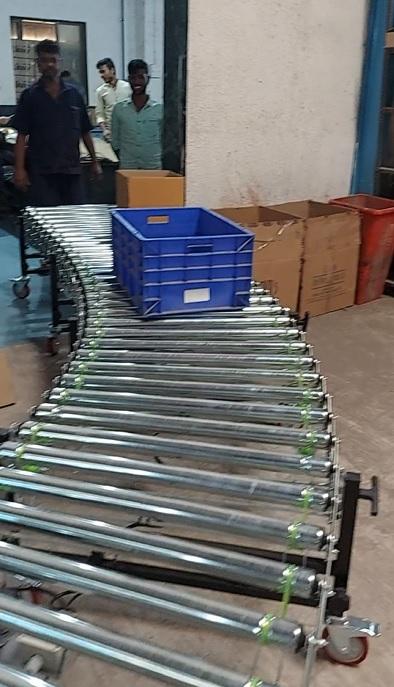
A flexible roller conveyor is a versatile material handling system designed to adapt to changing layouts and workflows. It's especially useful in warehouses, factories, and distribution centers where space is tight or operations shift frequently.
Key Features
• Expandable & Collapsible: Can stretch or compress to fit different lengths and storage needs
• Curved Movement: Navigates around obstacles and corners with ease
• Smooth Rolling: Uses gravity or motorized rollers for efficient transport
• Adjustable Height & Width: Customizable to suit various product sizes and ergonomic needs
• Mobility: Often mounted on wheels for easy relocation
Common Applications
• Truck loading and unloading
• Assembly lines
• Packaging and sorting stations
• E-commerce and logistics hubs
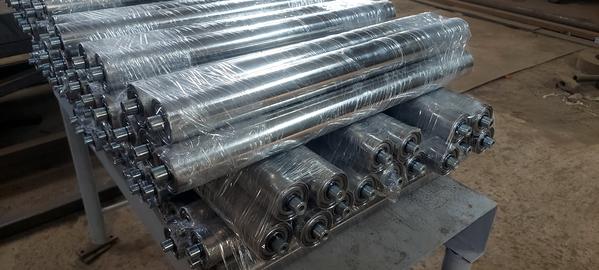
An idler roller (or idler) is a non-powered cylindrical component used in conveyor systems.
Unlike drive rollers, idlers don’t move on their own—they support and guide the conveyor belt.
There are different types like:
• Carrying idlers – support the loaded belt
• Return idlers – support the empty belt on the return side
• Impact idlers – absorb shock at loading points They’re essential in industries like mining, cement, and bulk material handling.
We manufacture a wide range of Idle rollers for a variety of applications serving both domestic & overseas Clients.
Rollers are made in Stainless steel, Mild steel (Zinc plated finish), PVC & other materials.
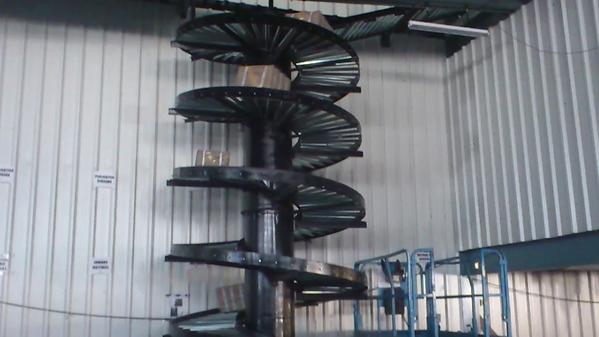
A spiral gravity conveyor is a material-handling / conveying equipment that uses gravity—not motors or electricity—to move items downward in a spiral path. Think of it as a vertical slide for boxes, packages, or crates, designed to transport goods between different levels of a facility efficiently and smoothly.
Here’s how it works:
It consists of a spiral-shaped track fitted with rollers.
Items placed at the top move downward due to gravity, guided by the spiral structure.
Since it doesn’t require power, it’s energy-efficient and low-maintenance.
These conveyors are especially useful in warehouses, distribution centers, and manufacturing plants where space is tight and vertical movement is needed. They’re ideal for transferring cartons or crates from upper floors to ground level without damaging the contents.
If you need to know if it’s right for your setup or what kinds of products it handles best? Advance Equipment Co. offers free consultation with that too.
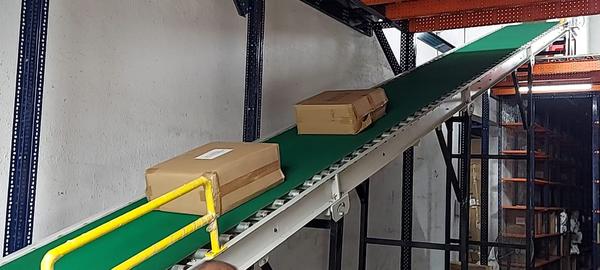
An inclined belt conveyor is a type of conveyor system designed to move materials between different elevations—either upward or downward—along a sloped path. It's widely used in industries like manufacturing, packaging, agriculture, and mining for efficient vertical transport.
🚀 Key Features
• Inclined Design: Allows materials to be moved between floors or over obstacles.
• Cleated Belts: Often equipped with cleats or ridges to prevent items from slipping.
• Variable Speed Control: Enables precise handling of delicate or heavy materials.
• Customizable Angles: The incline can be adjusted based on the application and space constraints.
🛠️ Common Applications
• Moving packaged goods in warehouses
• Transporting bulk materials in mining or agriculture
• Feeding products into processing machines
• Linking different levels in production lines
🧰 Types of Inclined Conveyors
Type Description
Flat Belt Incline Simple belt with cleats for grip
Cleated Belt Conveyor Raised sections to hold items in place
Spiral Incline Conveyor Saves space by spiraling upward or downward
Bucket Incline Conveyor Uses buckets or trays for loose or granular materials
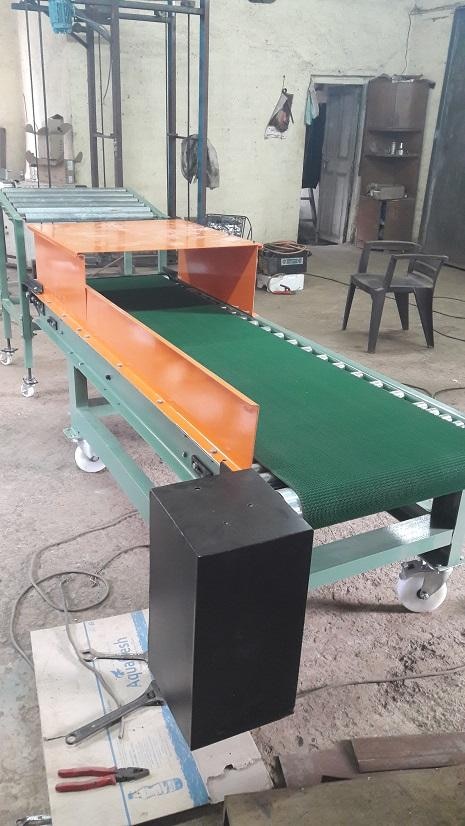
Belt Conveyors are widely used to carry load of bulk material along horizontal or inclined paths. They also carry light weight material from one spot of operation to another. They can be called the most commonly used conveying equipments. We manufacture various types of belt conveyors such as stationary portable and mobile conveyors that are capable of carrying high load to high extent of inclinations.
The belt conveyor that we offer is equipped with AEC 100 Friction Driven Belt Bends which ensures positive transfer of various products from various packages to bins. It has the capacity to carry load up to 50kg at speed that ranges from 5m/min to 60m/min without changing the position of the product.
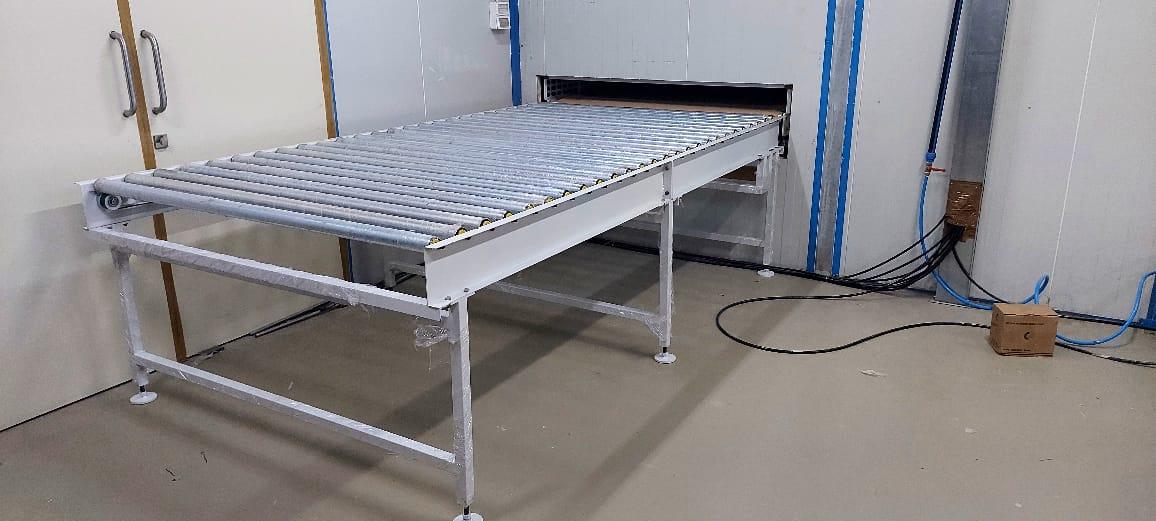
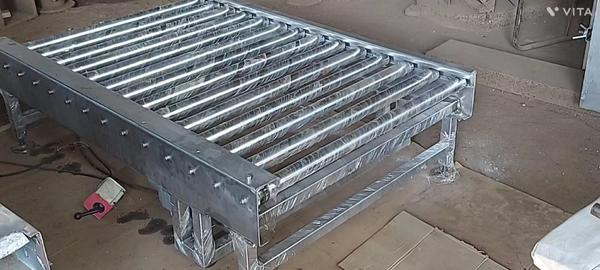
Roller Conveyor is a type of material handling system that uses rollers cylindrical components that rotate to transport items from one location to another. These conveyors are commonly used in warehouses, distribution centers, manufacturing, and packaging lines for moving boxes, pallets, or other stable, rigid items.